Slow cooling for glaze effects
Slow cooling holds the kiln back through the 1900 to 1400 F window so micro-crystals have time to grow in the glaze. That controlled cooling is what turns a flat glossy surface into a soft matte, a satin, or a mottled crystalline finish, especially with iron, rutile, or calcium in the recipe.
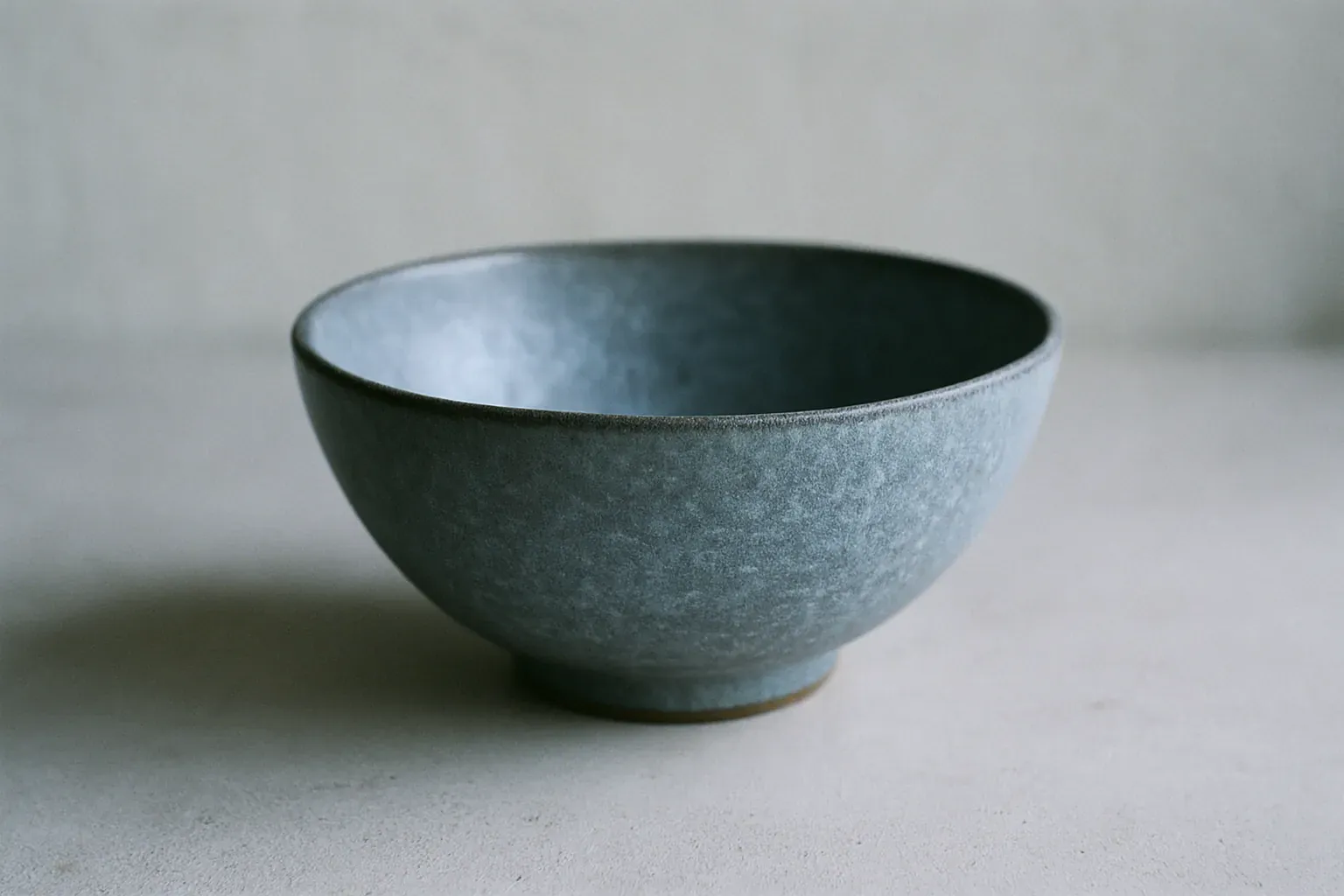
Why does cooling speed change a glaze?
A molten glaze is a liquid at peak. How fast it freezes on the way down decides whether crystals form inside it. Cool fast and the glaze locks into a smooth glassy surface. Cool slowly through the right window and tiny crystals grow, scattering light and turning the surface matte, satin, or mottled. The peak temperature sets maturity, but the cooling sets the look.
The crystals that make a satin or matte surface mostly grow between about 1900 F and 1400 F (1038 to 760 C). Holding the kiln back through that band, often near 150 F per hour or slower, is what gives micro-crystals time to form.
Source: Ceramic Arts Network, Super Cool: Slow Cooling in an Electric Kiln (ceramicartsnetwork.org).What does a slow cool schedule look like?
You fire your normal glaze program to the cone, then add a controlled cooling segment instead of letting the kiln free-fall. The example below sits on top of a standard cone 6 firing. It is a starting point, not a fixed recipe, so test it on tiles for your glazes first.
| Step | Rate | To target | Effect |
|---|---|---|---|
| Peak | 120 F/hr up | 2232 F | Mature cone 6, short hold |
| Fast drop | ~999 F/hr down | 1900 F | Skip past the glassy zone |
| Slow cool | 100 to 150 F/hr down | 1400 F | Grow matte and satin crystals |
| Free fall | off | room temp | Kiln cools on its own |
Which glazes respond to a slow cool?
Reactive glazes gain the most. Recipes high in iron, rutile, titanium, or calcium develop visible crystals and variegation when cooled slowly, which is why kiln makers added a slow-cool option to cone-fire mode. Bright glossy glazes and many commercial dipping glazes can lose their shine on a slow cool, so check the maker note before you commit a full kiln. True crystalline glazes go further still, with long holds in the growth window to grow large visible crystals.
How to add it to your firing
Build the standard glaze firing first, then program the extra cooling segments. The cone 6 glaze schedule guide gives the base program, and the how schedules work guide explains negative-rate cooling segments. When you set the firing in the schedule builder, you can pick a slow cool and it prints the full ramp, hold, and cooling sheet together.
Sources
- Ceramic Arts Network, Super Cool: Slow Cooling in an Electric Kiln (ceramicartsnetwork.org).
- Digitalfire firing schedule and crystalline glaze references (digitalfire.com).
- The Ceramic Shop, crystalline glaze guide (theceramicshop.com).
Build a slow cool schedule
Set your cone and add a controlled cool, then print the full firing sheet free.